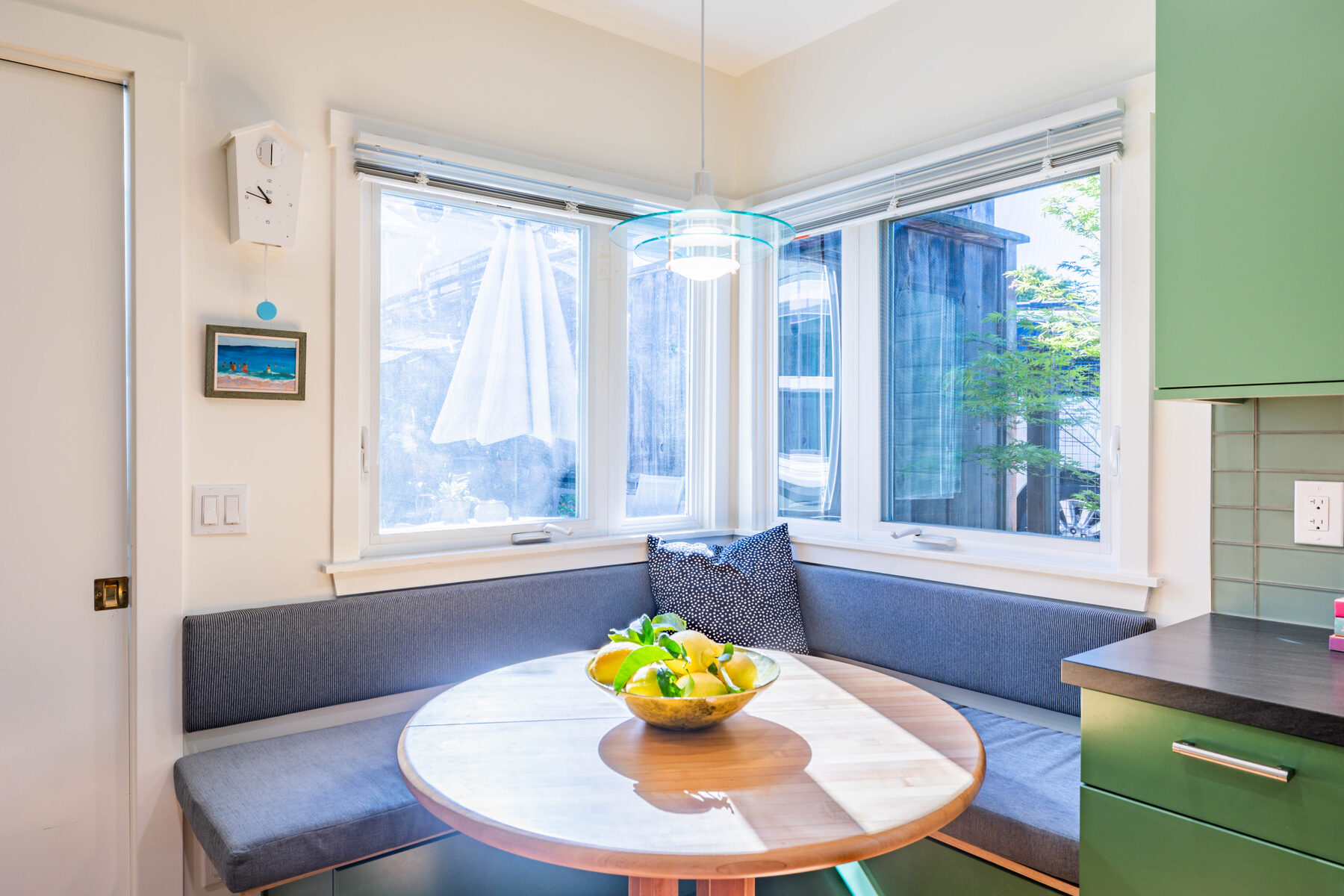
A confident green kitchen and a hand-glazed mosaic shower in Albany. Two-tone cabinetry, soapstone counters, a custom stained glass panel, hammered copper pendants — and a built-in banquette where the lemons live.
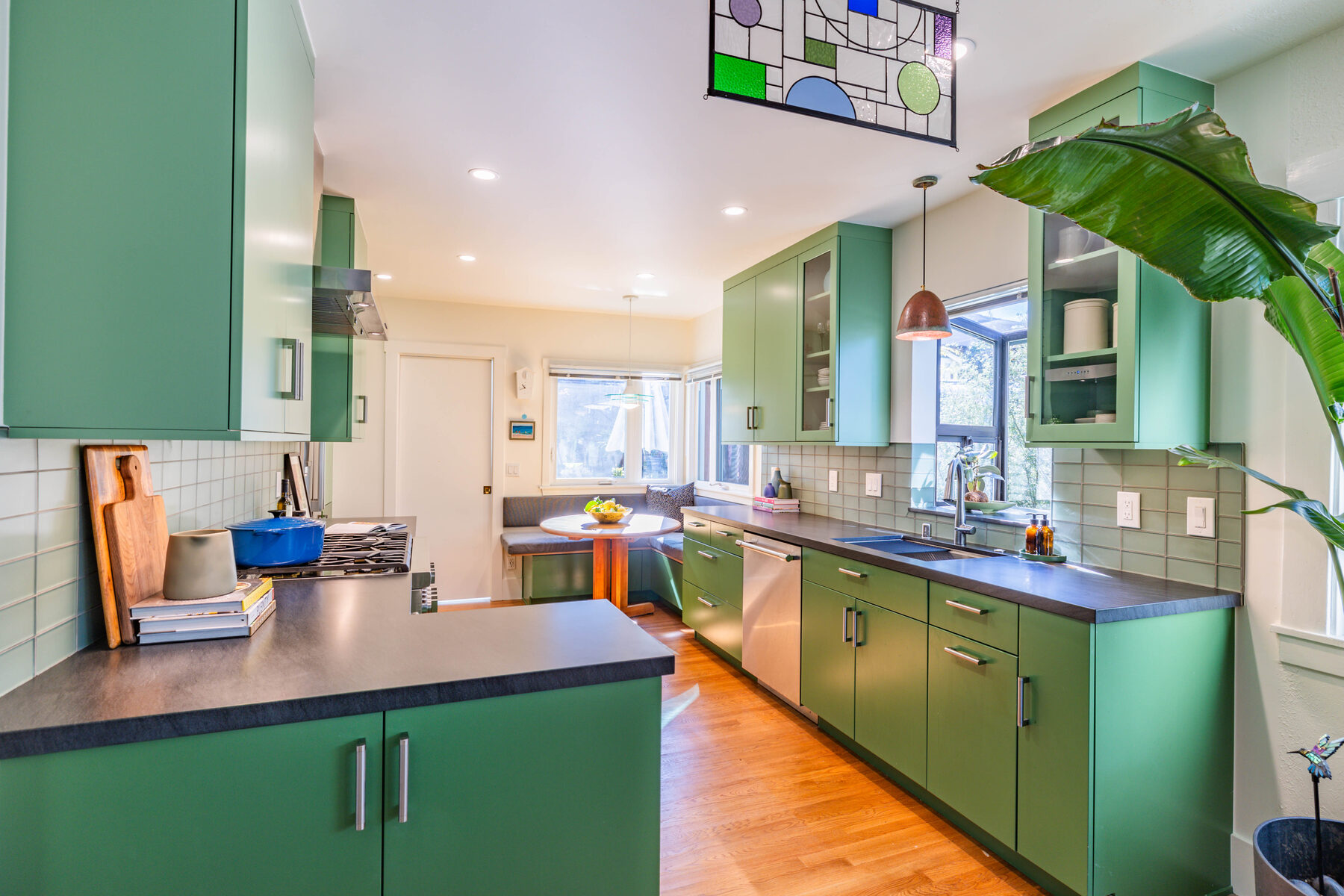
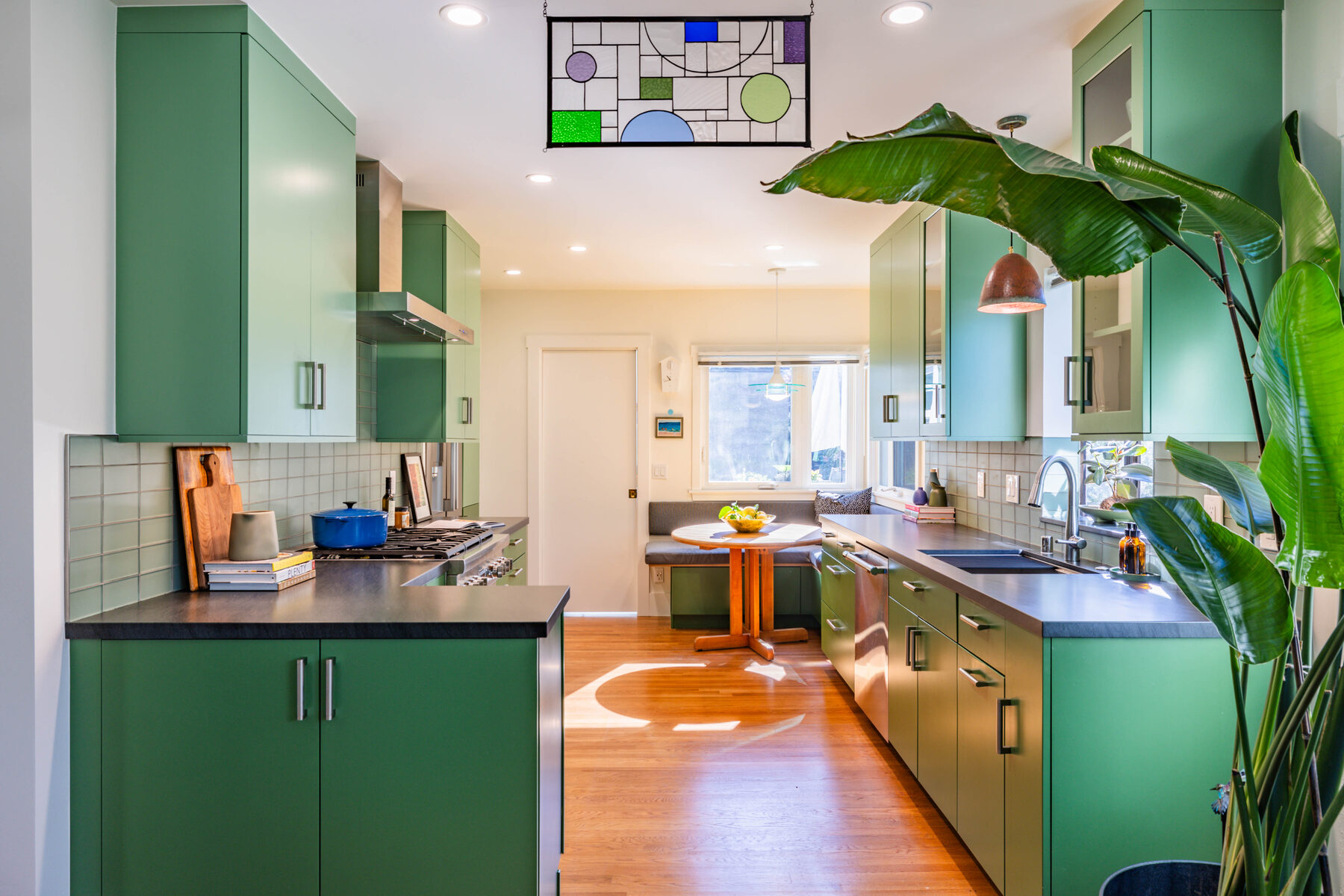
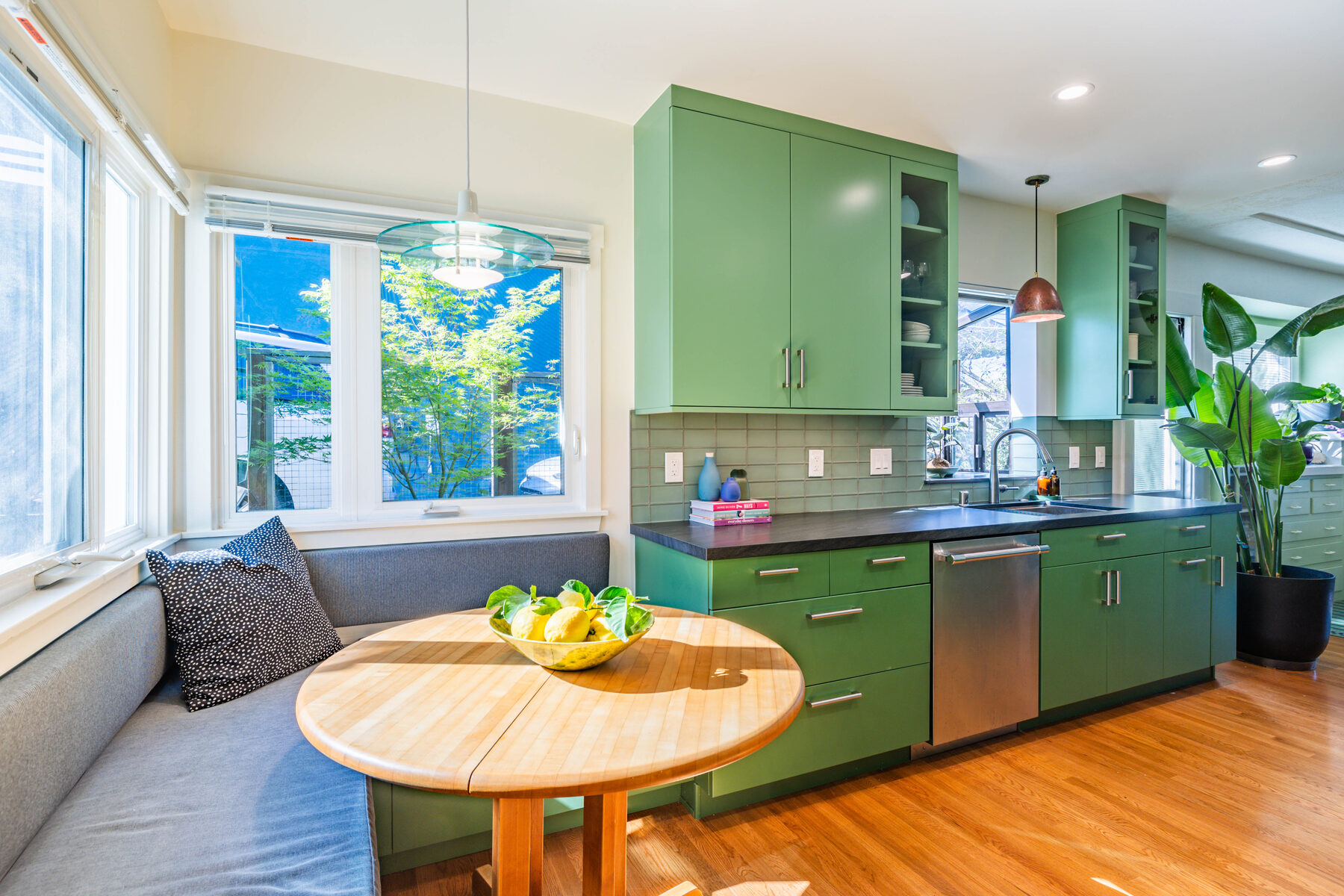
The clients on Curtis Street walked into our first meeting with a single requirement: they wanted a green kitchen. Not green accents, not a green island, not a "pop of green" somewhere. A green kitchen — every cabinet, top to bottom, in two shades chosen to read as one continuous gesture.
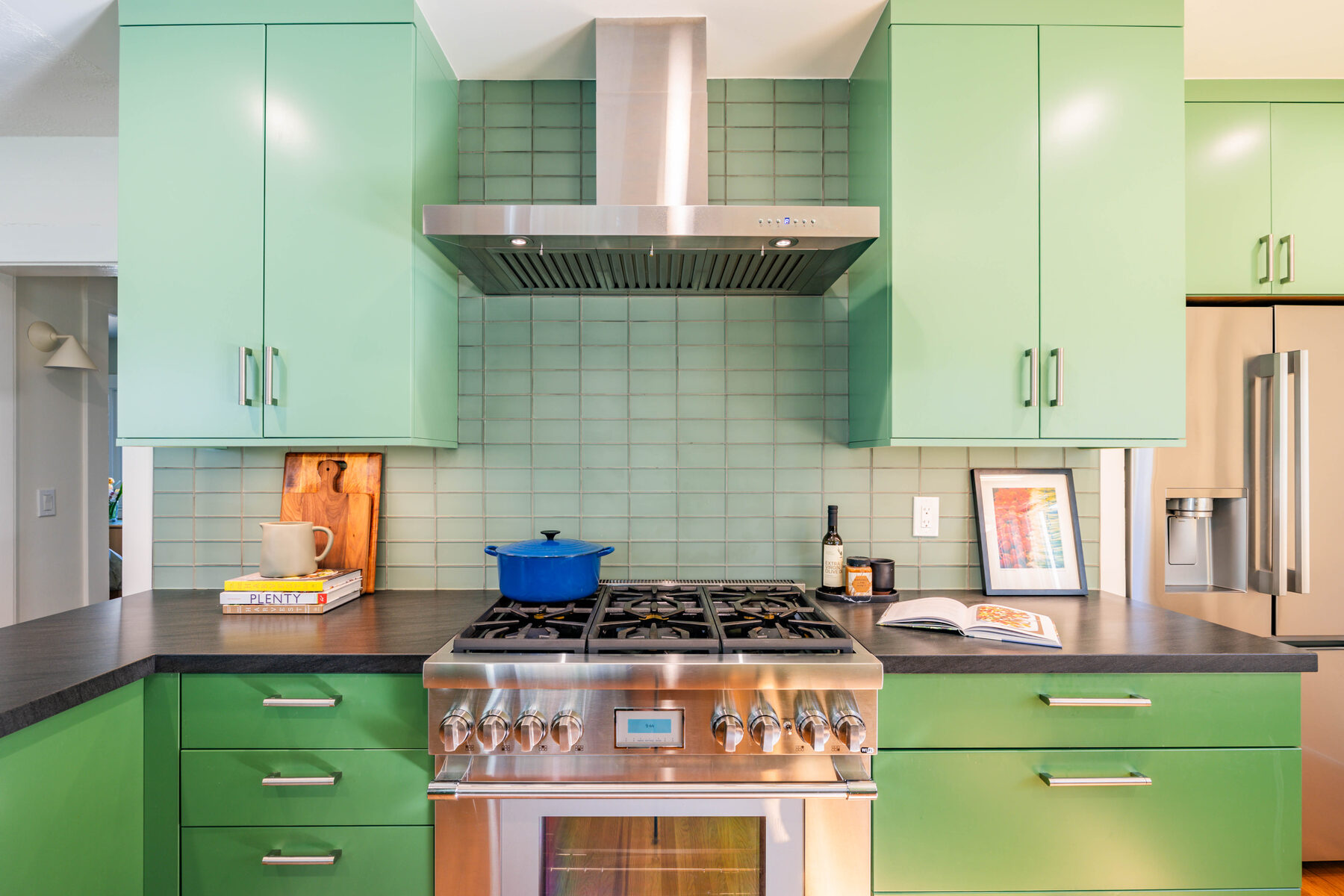
The lowers landed on a deep, slightly grayed moss. The uppers are two shades lighter, closer to a soft sage that catches the morning light without going minty. We mocked up four pairings on cabinet samples before the clients chose; the winning combination came from an afternoon spent with both colors hung side by side in their actual kitchen, under their actual light.
"Pick the green wrong, and the room argues with itself. Pick it right, and it carries the whole house."
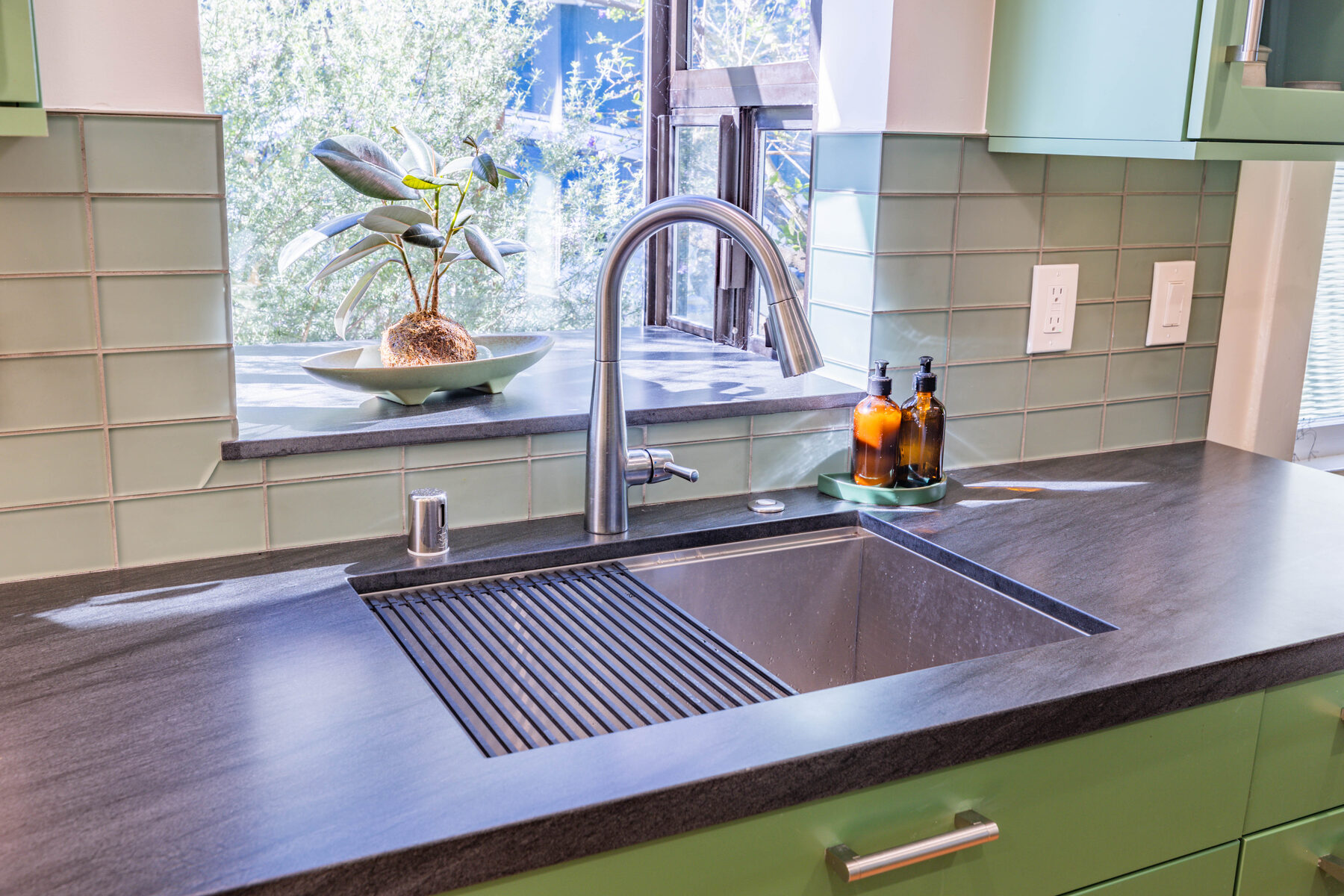
Soapstone counters became the foil. It's one of the few stones that can handle a strong color without competing with it: nearly black but warm, and it patinas over years instead of just wearing. We ran it along the entire perimeter and onto the small peninsula, with a softly eased edge so the room wouldn't feel hard-cornered. Six months in, the clients have done exactly what we told them they would — started oiling it monthly, and started noticing the marks where the kettle lives.
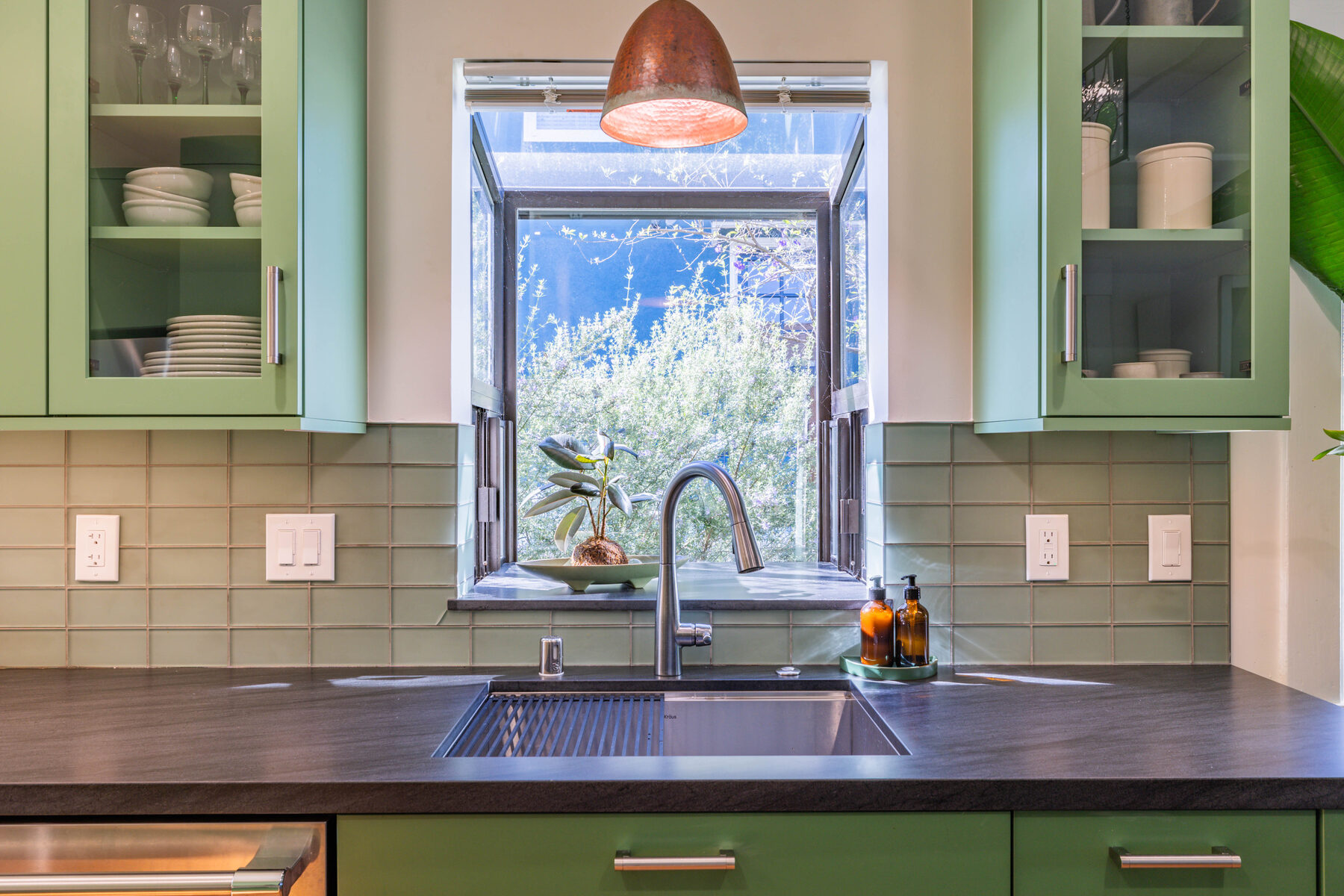
The backsplash is a 4×6 glass subway in a quiet variegated sage, softer than the cabinets and dark enough to anchor the open shelving. It carries the green up to the ceiling without doubling down on the cabinet color itself.
Two pieces in the room weren't ours: the hammered copper pendants over the sink and banquette, and the stained glass panel above the cooktop wall. Both belonged to the clients before the kitchen began. We rewired the pendants and reinstalled them. The stained glass, a geometric composition in the Frank Lloyd Wright tradition that the family had commissioned years earlier, we framed in place and lit from behind. It's the most photographed object in the kitchen.
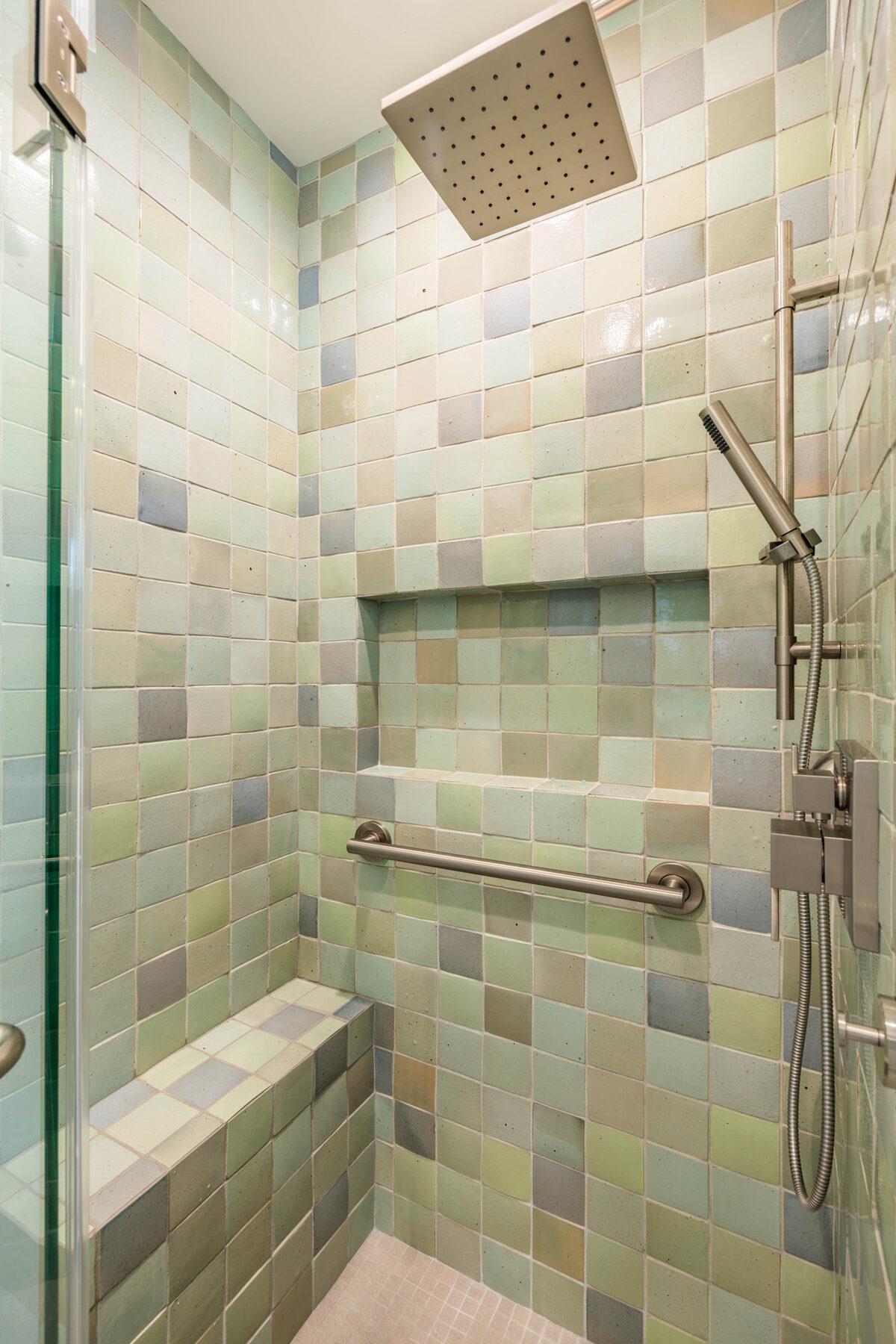
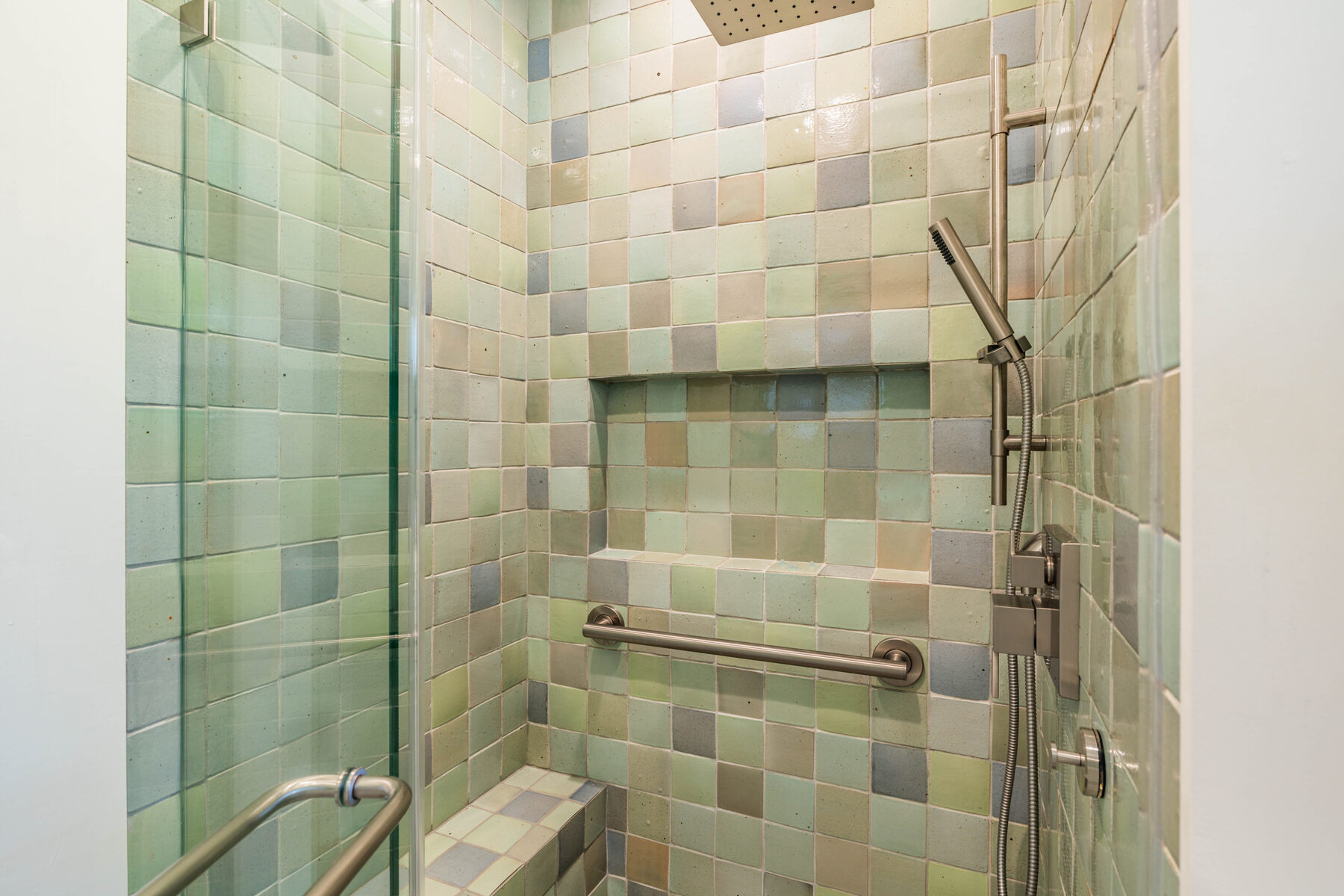
The bath, in a separate part of the house, takes a quieter approach to color. A single hand-glazed ceramic tile, two and a half inches square, comes in twelve subtly different glazes running from pale celadon to dusty cornflower. We laid the tiles out across the workshop floor and shuffled them by hand until the distribution felt random in the right way. Installation took three days. Getting the layout right took two.
We told them we wanted a green kitchen. They asked which green. Then they asked which green for the upper cabinets, and which for the lower. By the third question we knew we were in the right hands.